Book Appointment
- Home
- About us
- Contact us
- info@settleabroad.net
- 91-74031-74031, +12015757660
- Lic No. 909/ALC-4/LA/FN:1162

- 91-74031-74031
Migrate to Canada
Canada has become the prime destination for immigrants all over the world. One of the major reasons for the huge emigrant influx in Canada is introduction of several emigrant friendly immigration programs in coordination with skilled human resource requirement in diverse industries and cities in Canada. The country offers numerous opportunities for every category, class and occupation. Immigration in Canada can be categorised broadly as investors, businessmen, skilled worker and international students. Numerous factors including blooming career opportunities, social securities, highly efficient educational facilities, excellent medical systems etc. attract huge number of immigrants to the country. Settle Abroad`s Immigration Consultants aid you in paving your way to settle in Canada in hassle free manner.
Benefits of Migrating to Canada
Permanent Resident Visa allows you to enjoy legal entitlement of a resident of Canada. Your Permanent Resident Visa forms your first step towards gaining country`s citizenship and enjoy all benefits enjoyed by other citizens. Few of the perks would include:
- Right to be a legal civilian of the country
- Right to gain education/ study anywhere in the country
- Right to gain employment/work anywhere in the country
- Right to leave and re-enter to the country
- Right to have access to health facilities & schemes available to general public
- Right to apply for Citizenship after spending 3 consecutive years in the country
- Right to move to Mexico under NAFTA agreement
- Right to sponsor your relatives & friends in the country (Manitoba)
Skilled Worker Immigration Programs Offered by Canada
Canada has a deficit of skilled labour and to meet their demands they invite skilled immigrants who can contribute towards the economic development of the country. Workers are chosen on the basis of their skills and ability to contribute to Canada`s economy. The Permanent Residency (PR) status can be availed through three main pathways – Express Entry Program, Provincial Nominee Program (PNP) and Quebec Skilled Workers Program (QSWP). Other pathways for immigration to Canada are work-permit visa, which allows its holder to work in Canada for a limited amount of time. A person can choose to extend a work permit and apply for permanent residence without living the country. Immigrant skilled workers are offered plentiful opportunities across various cities and industries, having great demand in engineering, healthcare, IT, hotel & tourism industry, construction, service sector etc.
Express Entry Program
Express Entry Scheme was introduced by IRCC (Immigration Refugee and Citizenship Canada) as a pathway for skilled workers to migrate to Canada. The program is highly beneficial for skilled candidates looking to migrate within a period of 6 months. This program is a point based system in which the application is considered on the basis of nationality, age, language ability, family members, education, work experience, income and/or net worth, details on any job offer and other concerned details. The IRCC also determines the minimum Comprehensive Ranking System (CRS) points which is set as the benchmark for selection of the candidates and it is announced through the Express Entry draws which are released after every 15 days. The Express Entry scheme is enjoying high popularity with selection of approximately 7000 applications per month.
Express Entry manages applications for three economic immigration programs:
- Federal Skilled Worker Program
- Federal Skilled Trades Program
- Canadian Experience Class
Federal Skilled Worker Program is for skilled workers who are having relevant age, educational qualification, work experience and language skills to come and work in Canada and contribute towards development of the Canadian economy.
Federal Skilled Trades Program is for semi-skilled/unskilled workers with basic education, experience and language skills. To apply for this program, the candidate must have a valid Job Offer Letter from an employer; operating firm inside Canada.
Canadian Experience Class is for those individuals who are having a prior experience in Canada, say while on a Work permit or any other temporary visa.
Basic Eligibility for Skilled Worker Immigration through Express Entry
Canadian Authorities assess immigration applications on point based system. In order to be eligible to apply for permanent residency status in Canada through the Express Entry you must be able to score minimum of 67 points on 100.
| Ability | Points Allotted |
| Age | Maximum 12 Points |
| Language | Maximum 24 Points |
| Education | Maximum 25 points |
| Work Experience | Maximum 15 Points |
| Adaptability | Maximum 10 Points |
| Arranged Employment | Maximum 10 Points |
Age – The ideal age which grants maximum points to the candidate is 18- 35 years
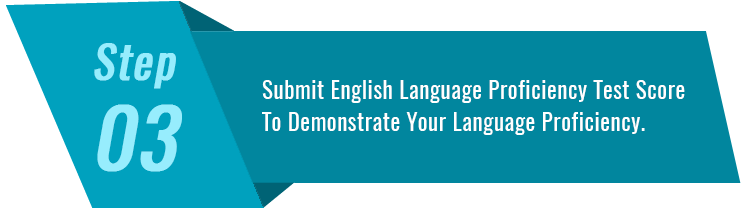
Language – It is essential for the candidate to demonstrate his/her language proficiency for at least one official language of Canada i.e. English / French.
The English language proficiency is tested through IELTS or CLB examination which are both very popular examinations. The French Language Proficiency is tested through the test TFI or NCLC.
The French Language Proficiency is tested through the test TFI or NCLC.
Education – The higher the education more points are allotted to the applicant. All the Degrees / Diplomas/ Certificate are evaluated under the Educational Credential Assessment (ECA) by an authorized body, in which the authentication and value of the degree is assessed being at par with the Canadian Education Board.
Work Experience – Canada wants skilled work force in its country thus the more experienced you are; the higher points you will earn.
Adaptability – A sibling or a spouse who is staying in Canada can get you higher points.
Arranged Employment – You can earn some extra points in case you have an employment letter from an employer in Canada.
Canada Express Entry Points Calculator
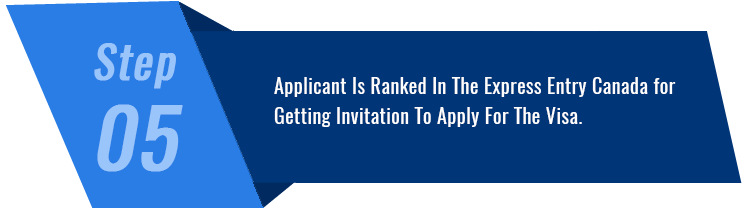
After the application enters the Express Entry pool, the Comprehensive Ranking Score (CRS) system, employed by Canadian Immigration is used to rank the application with the purpose of selecting most deserving applicant from the pool. Comprehensive Ranking Score is also a point based system which allots points (out of 1200) to the applicant, on the basis of three factors, on which the applicant`s capabilities and potential is estimated and selection decision is made. The factors include:
- Core/ Human Capital Factor
- Spouse or common-law partner factors
- Skill transferability factors
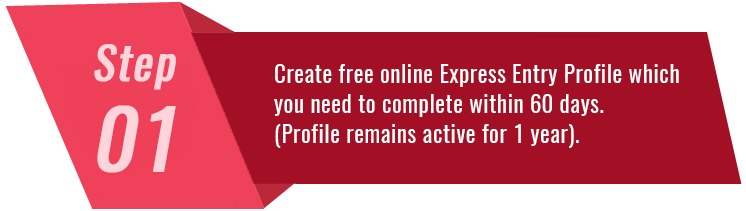
Applying Under The Express Entry System



Provincial Nominee Programs (PNPs)
Provincial Nominee Programs (PNPs) is another popular system authorised by the Canadian authorities to invite skilled workers to Canada. It is a selection system in which all those candidates who could not qualify under the Express Entry Program can file for a Permanent Residency (PR) status of a particular province. These programs are offered by different provinces of Canada with purpose of recruiting candidates to meet local labour market needs in that particular province. Each provincial program has its own pre-requisites and eligibility criteria. In order to immigrate through one of the PNPs you must meet eligibility criteria laid down by that particular province.
Provincial Nomination Programs offered in Canada
- Ontario Provincial Nomination Program
- British Columbia Provincial Nomination Program
- Alberta Provincial Nomination Program
- Nova Scotia Provincial Nomination Program
- Saskatchewan Provincial Nomination Program
- Manitoba Provincial Nomination Program
- Quebec Provincial Nomination Program
- Prince Edward Provincial Nomination Program
- New Brunswick Provincial Nomination Program
- Newfoundland and Labrador Provincial Nomination Program
The Province of Alberta invites foreign workers, students, and trades-persons who qualify to apply for one of the following categories of the Alberta Provincial Nominee Program:
- Alberta Skilled Worker Category
- Alberta Semi-Skilled Worker Category
- Alberta International Graduate Category
- Alberta Compulsory and Optional Trades Category
- Alberta Engineering Occupations Category
- Alberta Self-Employed Farmer Steam
- Each of These Categories Provides Its Own Set of Rules and Requirements.
The British Columbia Provincial Nominee Program (BCPNP) accelerates the permanent resident application process for skilled and/or experienced workers, experienced business persons and their family members who want to settle in the province of British Columbia. This program is split into two categories: Strategic Occupations and Business Immigration. To apply for the BC Provincial Nominee Program under one of these two categories, you must meet the basic requirements set by the province of British Colombia:
- Intend To Settle in British Columbia
- Be Able and Willing To Become Economically Established in British Columbia
- Have Legal Status in Your Country of Residence, Whether You are In Canada or Outside of Canada
- Must Not Have an Active Refugee Claim
In addition to these basic requirements, you must qualify under either the Strategic Occupations or Business Immigration category and satisfy all the requirements of the category under which you are applying.
The Province of Manitoba has designed their Provincial Nominee Program to invite qualified skilled workers and business people looking to immigrate to Canada. If you are a skilled worker or business person who is looking to settle and open a business or start a farm in the province of Manitoba then you may qualify to apply for the Manitoba Provincial Nominee Program. To qualify for this program as a Skilled Worker you must meet the requirements for age, education, work experience, language proficiency and adaptability. Business persons or farm owners must meet the minimum net worth and have experience as required by the province for each of these categories.
The Province of New Brunswick offers exciting opportunities for skilled workers and business applicants who are interested in immigration to Canada’s east coast. Skilled workers must have a guaranteed offer of permanent employment from a New Brunswick employer or a family supporter who is a citizen or permanent resident of New Brunswick. Business applicants must be willing and able to establish a business in New Brunswick and sign an agreement to settle permanently in New Brunswick.
The province of Newfoundland has created three categories under which you may qualify for the Newfoundland Provincial Nominee Program. International students who have graduated from a recognized post-secondary educational institution in Canada may qualify under the category of International Graduates. The Family Connections category is for those who have family members in Canada that are either citizens or permanent residents living in Newfoundland and Labrador. For foreign workers with full-time job offers, the Skilled Worker category may be the way to go.
Each of these three categories has a different set of requirements which you must meet in order to be eligible to apply for the program.
The province of Nova Scotia offers a haven for many immigrants with several different options available under the Nova Scotia Provincial Nominee Program. The categories for this program include skilled workers, international graduates, family business workers, non-dependent adult children of nominees, agri-food sector, and community identified individuals. Click on the link provided below to read more about the requirements for each of these categories. If you believe you fit into any of these categories and are interested in a life full of great opportunities, you should consider the Nova Scotia Provincial Nominee Program as your ticket to Canada.
The Northwest Territories offer four categories under which you may apply: Skilled Worker, Critical Impact Worker (Service & Hospitality Sector Occupations), Entrepreneur Business, and Self-Employed Business. Each of these categories comes with its own set of requirements so follow the link below to see if this program is the right fit for you.
The province of Ontario has created an employer-driven program which requires that candidates have a permanent full-time job offer from an Ontario employer or a PhD. from a publicly funded Ontario University. There are three categories available under this program:
- Ontario PNP General Category – for foreign workers with a full-time job offer and at least 2 years of work experience.
- International Students – for students who have a job offer, a PhD, or a Master’s degree.
- Investors – for individuals or companies looking to make an investment in the province of Ontario
If you fit into any of these three categories, you may qualify for fast-track processing of your immigration application. More detailed information about each of these categories and their respective requirements can be found on the Ontario Provincial Nominee Program page.
Prince Edward Island has split their Nominee Program into seven (7) categories. If you are a worker, student or business owner who is interested in immigrating and settling in Prince Edward Island, you may fit into one of the following categories:
- Skilled Workers Category – you must have a job offer in a skilled position along with education and training consistent with the position offered.
- Critical Workers Category – you must have a job offer in one of the province’s in-demand occupations (follow the link below to see a list of these occupations).
- International Graduates Category – you must have graduated from an full-time study at an accredited Canadian University or College within the past two years, have a minimum of six (6) months of work experience and a job offer in a skilled position.
- Family Connections Category – if you have family members residing in Prince Edward Island for more than two years as Canadian permanent residents or citizens with a regular source of income and an unblemished personal history, your family may nominate you for this category as long as you are willing and able to work. 100% Business Ownership Category – you must meet all the requirements to establish and operate a business in Prince Edward Island (see link below for full list of requirements)
- Partial Business Ownership Category – if you control more than 1/3 of the equity in the business and meet the other requirements to establish and operate a business, you may qualify for the program under this category.
- Work Permits Category – you must be eligible and willing to apply for approval of a work permit for the Prince Edward Island business where you intend to work and invest and meet all the requirements to establish and operate a business in Prince Edward Island.
If you are interested in settling in Prince Edward Island and you feel that you qualify for one of the above listed categories, you may read further for details on the program and find out which of these categories is the best fit for you.
There is a choice of three categories you can apply to. You will also have to complete the federal application forms at the same time.
- International Skilled Worker Category is for skilled workers abroad who want to work and live in Saskatchewan.
- Saskatchewan Experience Category is for foreign nationals who are currently living and working in Saskatchewan.
- Entrepreneur and Farm Category is for those who want to invest and actively manage a Saskatchewan business or farm operation.
If you are interested in settling in Saskatchewan and you feel that you qualify for one of the above listed categories, you may read further for details on the program and find out which of these categories is the best fit for you.
The province of Yukon has established the Yukon Provincial Nominee Program for entrepreneurs and skilled workers wishing to immigrate to the province. Entrepreneurs who wish to open or invest in a business in Yukon may qualify for the Business Program Category. The Skilled Workers Category is for individuals who have a full-time job offer from a Yukon employer in a skilled occupation.
Quebec Skilled Workers Program (QSWP)
Quebec Skilled Worker Program (QSWP) is developed by the Government of Quebec and the Canadian Federal Government to enable highly educated and trained foreign nationals to immigrate to Quebec as skilled workers. The province has its own immigration programs and selection criteria.
The applications for QSWP are evaluated on the basis of selection grid of factors. The province follows its own point based selection model and the applicant must secure a minimum qualifying score in order to be eligible to obtain the Quebec Selection Certificate, also called Certificate of Selection of Quebec (CSQ) which is later used for application of permanent residency in Canada. The points are credited on the basis of the credentials including; age, education, work experience, language ability, adaptability etc. An individual applicant must score 50 points (at least) while the ones with spouse are required to score a minimum of 59 points to meet eligibility criteria.
Applying for QSWP
The applicants interested to settle in the province of Quebec must start by declaring their interest in applying to the program of QSWP by creating a profile under Quebec Expression of Interest Bank using the Arrima Portal. The portal remains open round the year.
The Quebec Immigration Ministry invites the applicants, who submitted their expression of interest on the Arrima Portal, to submit their applications through the Mon Projet Quebec Portal. The portal allows the applicants to complete their applications for the CSQ, make online payments, follow the application status, make changes to the application if required, and access personal electronic messaging throughout the process.
To settle in Quebec permanently the applicant has to undergo two step immigration process:
- Achieve CSQ (Certificate of Selection of Quebec) authorised by the Quebec Province
- Get approval of the Federal Government
The Quebec region is known to place huge importance on the knowledge of French language and hence gives an edge to candidates with language proficiency in French.
Quebec Experienced Program (PEQ)
The Quebec Experience Program, or Programme de l’expérience Québécoise, or PEQ) is another Quebec immigration pathway available to eligible international graduates with a Quebec diploma and individuals with at least 12 months skilled work experience in the past 24 months. Applicants to the PEQ are required to have an advanced intermediate knowledge of spoken French.
Caregivers
The In-home Caregiver Program is run by both Employment and Social Development Canada (ESDC) and Immigration, Refugees and Citizenship Canada (IRCC). To be approved for the Program, both the employer and the caregiver must satisfy several criteria, as well as complete the application process.
Basic Requirements For All In-Home Caregivers
Basic Requirements
- Receive A Positive Labour Market Impact Assessment,
- Language Proficiency: Speak, Read and Understand English/French,
- Possess A Signed Written Contract With The Future Employer, And
- Acquire A Work Permit Before Entering Canada.
Educational Requirements
- 1 year completed Canadian post-secondary credential or equivalent foreign credential.
Once Eligible For The Program, All Caregivers Must:
- Offer care on full-time basis, i.e. minimum 30 Hrs. a week
- Work without supervision in the private household where the care is being provided.
Basic Requirements for Caregiver Employers
Employers may find their own caregivers by means of advertisements, personal contacts or employment agencies, on their own responsibility.
In order to qualify for the Caregiver Program, the employer must:
- Have made a sufficient effort to first fill the position with a Canadian, or a permanent resident or foreign worker already in Canada,
- Possess sufficient income to pay an in-home caregiver,
- Make a job offer that has primary caregiving duties for a child or an elderly or disabled person, and
- Have a signed written contract with the future caregiver.
Caregiver Program allows application for permanent residency in 4 ways:
1. Interim Pathway for Caregivers
Note: Applications for Interim Pathway for Caregivers is open for 3 months, from March 4 to June 4, 2019
The program is suitable for the applicants having:
- Minimum 1 year of work experience as a home child care provider or a home support worker
- Minimum language and education requirements
2. Caring for Children Program
Note: The Caring for Children Program is scheduled to end on November 29, 2019. To be eligible to apply, you’ll need to meet the requirements and submit your application before November 29, 2019.
The program is appropriate for the applicant with:
- Minimum 2 years of experience as a home child care provider in Canada
- Minimum language and educational requirements
3. Caring for People with High Medical Needs Program
Note: The Caring for People with High Medical Needs Program is scheduled to end on November 29, 2019. To be eligible to apply, you’ll need to meet the requirements and submit your application before November 29, 2019.
The program is suitable for applicants if:
- The applicant has been working for at least 2 years as a:
- Registered Nurse
- Licensed Practical Nurse
- Nurse Aide Or Orderly
- Home Support Worker
- The applicant meets minimum language and educational requirements
4. Live-in Caregiver Program
The Live-in Caregiver Program (LCP) is best suited to the applicants if they have minimum 2 years of experience in the program and:
- If the applicant is already working in Canada with LCP work permit
- If the applicant was approved for his/her first LCP work permit based on a Labour Market Impact Assessment submitted to Employment and Social Development Canada on or before November 30, 2014
Atlantic Immigration Pilot Program (AIPP)
Note: The Atlantic Immigration Pilot Program has been extended for 2 years by the Canadian Government on March 1, 2019. To be effective from May 1, 2019, the program announces some changes that allow more time to apply for international graduates, more flexibility for hiring health care professionals and some changes to requirements for temporary work permit applications are also announced.
The Atlantic Immigration Pilot Program is designed with idea of addressing labour market challenges of the Atlantic Canada. The program allows Atlantic employers to hire qualified foreign nationals for jobs that they fail to fill locally. The program is a partnership between the Government of Canada and the 4 Atlantic provinces:
- New Brunswick
- Newfoundland and Labrador
- Nova Scotia
- Prince Edward Island
AIPP entitles employers to hire foreign nationals through 1 of the 3 programs:
- Atlantic High-Skilled Program
- Atlantic Intermediate-Skilled Program
- Atlantic International Graduate Program
Eligibility Requirements
Each program has its own requirements to fulfil. The basic requirements cover following aspects of the applicant:
- The job that applicant will have in the Atlantic province
- Skills, experience and education
- Ability to communicate in English or French
- Capacity to support self and family in Canada
- Intent to reside in the Atlantic province
Atlantic High-Skilled Program
To be eligible for the Atlantic High-Skilled Program the applicant must meet following criteria:
- Work Experience : have a minimum 1 year experience in a management, professional or technical/skilled job
- Education : have at least a Canadian high school diploma or equivalent education
- Language : take a language test to show his/her language proficiency to communicate in English or French
- Funds : demonstrate he/she can support self and family when they come to Canada
- Secure a Job Offer : the applicant is required to secure a job offer abiding following requirements:
- The offer must be made using the Offer of Employment to a Foreign National
- The employer must have a Confirmation of Designation from the Province
- Job must be full-time
- Job must be non-seasonal
- Job must be skill type/level 0, A or B under the NOC.
- The employer offering the job that will last for at least 1 year
Atlantic Intermediate-Skilled Program
- Work Experience:
- Have experience of minimum 1 year in a job that requires a high school education and/or job-specific training (for instance, industrial butcher, long-haul truck driver, food and beverage server etc.)
- Have work experience as a registered nurse or registered psychiatric nurse or as a licensed practical nurse, and also you have a job offer to take position as a nurse’s aide, orderly or patient services associate or a job for a home secure worker.
- Education : have at least a Canadian high school diploma or equivalent education
- Language : take a language test to show his/her language proficiency to communicate in English or French
- Funds : demonstrate he/she can support self and family when they come to Canada
- Secure a Job: the applicant is required to secure a job offer abiding following requirements:
- The offer must be made using the Offer of Employment to a Foreign National
- The employer must have a Confirmation of Designation from the Province
- Job must be full-time
- Job must be non-seasonal
- Job must be skill type/level 0, A, B or C under the NOC
- Job is permanent and there is no set termination date
Atlantic International Graduate Program
To be eligible for the Atlantic International Graduate Program the applicant must meet following criteria:
- Work Experience : no work experience required
- Education :
- Must have at least a 2 year degree, diploma, certificate, trade or other credential from a publicly-funded institution in an Atlantic province
- Must have been a full-time student for entire duration of study
- Must be graduated in 2 year period prior to applying for the permanent resident status
- Have lived in an Atlantic province for at least 16 months in the 2 years before getting your degree, diploma or credential
- Language : take a language test to show his/her language proficiency to communicate in English or French
- Funds : demonstrate he/she can support self and family when they come to Canada
- Secure a Job : the applicant is required to secure a job offer abiding following requirements:
- The offer must be made using the Offer of Employment to a Foreign National
- The employer must have a Confirmation of Designation from the Province
- Job must be full-time
- Job must be non-seasonal
- Job must be skill type/level 0, A, B or C under the NOC
- The employer offering the job that will last for at least 1 year
If the applicant and the employer meet the requirements, the applicant gets permanent resident status. This means the applicant can live and work in Canada.
If you wish to know more about the Atlantic Immigration Pilot program and the eligibility requirements, it is suggested that you connect now with Settle Abroad`s immigration experts.
Family Class Sponsorship
Family Class Sponsorship Program reunites families by enabling, permanent resident or citizen of Canada to sponsor a close relative for immigration to Canada. The sponsor`s relatives will be entitled to live, study and work in Canada if they are granted permanent residency of the country.
Who can Sponsor?
One can sponsor certain relatives to come to Canada if he/she is an adult (i.e.at least 18 years old) and a:
- Canadian citizen or
- Person registered in Canada as an Indian under the Canadian Indian Act or
- Permanent resident of Canada
In addition to being a Canadian Citizen or Permanent Resident, the sponsor is also required to meet following criteria:
- Must demonstrate his/her financial ability to support the sponsored person with the essential needs including, food, clothing, shelter, dental and eye care and other health services not offered to Canadian permanent residents.
- Must have physical residency in Canada or they must demonstrate intension to reside in Canada by the time the sponsored person arrives in Canada as a permanent resident.
- Must not be in prison, not bankrupt, not under a removal order and not be charged with a serious offence.
- Must be entered into following agreement with the government of Canada or Quebec
- Must agree to provide the sponsored person with essential needs for a prescribed period of time; and
- If the sponsored relative is over 19 years of age and not elderly, and the sponsor promises to support the sponsored person(s) for a prescribed period of time, the sponsored person(s) must promise to make every effort to become self-supporting
Who can be sponsored?
The person seeking sponsorship must be related to the sponsor as one of the following:
- Spouse, common-law or conjugal partner
- Dependent child
- Parent
- Grandparent
- Sibling, nephew, niece, or grandchild under 18 years who is unmarried and whose parents are deceased
Various Family Class Sponsorship Programs offered by Canada
Spousal or Common Law Partner
The Spousal Sponsorship Program allows the permanent resident or citizen of Canada to sponsor his/her spouse or Common-law partner for Canadian permanent residence. The application can be filed as either Outland Sponsorship (in cases when the sponsored partner is living outside Canada) or Inland Sponsorship (when sponsored partner is living in Canada but the partner holds a temporary status)
Both the Canadian citizen or permanent resident (the 'sponsor') and the foreign national (i.e. the 'sponsored person') must be approved by Immigration, Refugees and Citizenship Canada (IRCC) in order for the sponsored person to receive a visa.
It is required to establish the relationship of the sponsor and sponsored person qualifies under one of the following categories:
- Spouse
- Common-Law Partner
- Conjugal Partner
NOTE: Canada recognizes same-sex marriage, and same-sex partners may be eligible to apply under any of the above three categories, provided they meet all eligibility requirements.
Additional Requirements for the Sponsor:
- The sponsor cannot have been sponsored to Canada as a spouse within the last 5 years.
Requirements for the Sponsored Person:
- Must be at least 16 years of age and
- Must not be too closely related by blood to the sponsor.
Permanent residence granted under the Spousal Sponsorship program carries certain conditions that must be met:
- The sponsor is financially responsible for the person sponsored for three years after the sponsored person becomes a permanent resident.
- Individuals who come to Canada as spouses are themselves barred from sponsoring a spouse in turn for five years after receiving Canadian permanent residence.
To find out if you and your partner are eligible for spousal sponsorship contact Settle Abroad`s Immigration Expert now!
Dependent Child Sponsorship
Canadian citizen or permanent resident may sponsor his/her dependent child (both natural as well as adopted) to reside in Canada as a permanent resident. Dependent child may include:
- A child of the sponsor, or a child of the sponsor’s spouse or common-law partner, who is under age 22 and don’t have a spouse or common-law partner of their own.
- Children over age 22, if they relied on their parents for financial support before age 22, and are unable to financially support themselves due to a mental or physical condition.
- Child in sole custody of a previous spouse are still considered dependent children, and must be declared on the sponsorship application.
To receive a visa through this immigration program, the sponsor and the sponsored person will be required to prove their relationship to one another. Children sponsored through the Family Class of immigration receive Canadian permanent residence and entitles them the right to study and work in Canada.
To find out if you and your child/children are eligible for this program, contact Settle Abroad`s Immigration Expert now!
Parent and Grand Parent Family Class
Parents and Grand Parents of the permanent resident or citizen of Canada can be sponsored to live in Canada as a permanent resident, by applying through the Parent and Grand Parent Sponsorship Program.
Additional Requirements for Sponsor:
- Must be residing in Canada (potential applicants will need to provide a proof of status during the Interest to Sponsor phase);
- Exceed the minimum income cut-off for this program (if married or in a common-law relationship, the income of both the sponsor and spouse can be included) and provide proof of income to IRCC;
- Sign an undertaking
- To financially support the sponsored for 20 years (starting when they become permanent residents); and
- To repay any social assistance benefits paid to the sponsored family members (if applicable) for a period of 20 years.
- If the sponsor resides in Quebec, an additional "undertaking" must be signed with the province of Quebec.
Steps to Apply for Parent and Grandparent Sponsorship
- First step to apply for the program is completing the Interest Support Form on the IRCC website.
- Invitations to apply for the program will be issued, based on the order Interest to Sponsor forms were received (i.e. “first-in, first-served”), once the forms are reviewed for eligibility.
- Invited sponsors are required to submit a complete application and all supporting documents within 60 days from the date of invitation.
Provincial Family Class Sponsorship
Certain Provincial Nomination Programs (PNPs) offer Family Sponsorship Program with lenient regulations as compared to the Federal Family Class Sponsorship Programs. Some programs allow sponsorship of same qualifying relatives as by the Federal Programs, while other programs are open for distant relatives like cousins etc.
Provincial Nominee Programs with a Family Class Category
- Alberta Immigrant Nominee Program (AINP)
- Manitoba Provincial Nominee Program (MPNP)
- Newfoundland And Labrador Provincial Nominee Program (NLPNP)
- Nova Scotia Nominee Program (NSNP)
- Prince Edward Island Provincial Nominee Program (PEIPNP)
- Saskatchewan Immigrant Nominee Program (SINP)
Two-Step process
The family class sponsorship program application process can be broken down into two main steps, which must be followed in the order described below:
1. The sponsor must submit their sponsorship application; This application must be initiated by the sponsor and involves an assessment of the sponsor’s eligibility under the family class. The sponsor must first be approved through a separate application in order to become a sponsor.
2. The foreign national must submit their application for permanent residency. This application must be initiated by the foreign national the sponsor wishes to bring to Canada as a permanent resident. The foreign national must first meet a number of requirements under the family class in order to qualify under the family class program, and then another separate application for their permanent residency.
To learn more about your Family Sponsorship options contact Settle Abroad`s Immigration Experts now!
The process of permanent residency visa application is crucial to realise your dream to settle| work | study in your dream country, Canada. To help you pave your way through, our team of highly qualified and certified professionals, immigration consultants offer comprehensive guidance concerning the processing, documentation, filing of the Permanent Residency status application, visa counselling, interview preparation and pre-departure briefs. For free consultation contact Settle Abroad now.